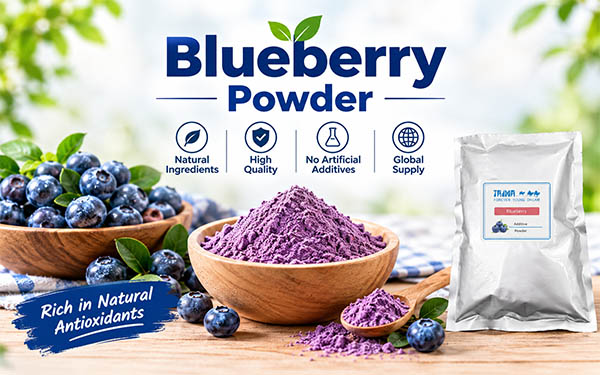
Food Grade Blueberry Powder Flavor Sweet Berry Aroma for Bakery & Drinks
Physical Properties & Key Aroma Components (Formulation Feference):
- Physical Properties:
Appearance: White to pale yellow powder
Aroma: Rich, authentic blueberry scent; primarily sweet, featuring the signature fresh sweetness and slight tartness of blueberries, accompanied by subtle herbaceous green notes and faint floral undertones; long-lasting aroma retention.
Form: Powder; disperses evenly in dry ingredients; good water solubility and easy to dissolve.
Stability: Processed using specialized techniques to ensure good stability; certain products offer high-temperature resistance.Key Aroma Components (Formulation Reference):
Blueberry flavor is typically formulated from a blend of various aromatic compounds, including esters (e.g., ethyl butyrate, ethyl hexanoate, ethyl acetate, isoamyl acetate), aldehydes (e.g., benzaldehyde), ketones (e.g., raspberry ketone), lactones (e.g., gamma-decalactone), acids (e.g., lactic acid, acetic acid, propionic acid), as well as leaf alcohol and benzyl alcohol, all combined to simulate the unique sweet-and-tart fruity aroma and fresh taste of blueberries.
Applications & Recommended Usage:
Beverages: Fruit juice, fruit-flavored soda, carbonated drinks, functional drinks, milk-based drinks, lactic acid bacteria drinks, tea beverages
Baked goods: Blueberry cake, bread, cookies, pastries, egg yolk pies, mooncake fillings
Confectionery & snacks: Gummies, hard candy, chewing gum, milk candy, chocolate, jelly, pudding
Dairy & frozen treats: Flavored milk, fermented milk, yogurt, ice cream, popsicles, ice lollies
Snack foods: Puffed snacks, potato chips, roasted nuts/seeds, cereal, seasoning powders
Convenience foods: Instant powdered beverages, seasonings for convenience foods
Health supplements: Blueberry-flavored chewable vitamin tablets, protein powder, etc. (masks the bitterness of raw ingredients)
Condiments: Fruit jams, sauces, compound seasonings
Additionally, it can be used in personal care products (e.g., handmade soap, lip balm, detergents, cleaning agents, fabric softeners) and pet food.
The exact dosage may vary depending on the specific product formulation and desired flavor intensity. We recommend conducting small-scale trials to determine the optimal usage level.
Recommended Dosage:
Beverages (water-soluble): 0.03% – 0.15%
Baked goods (pastries, bread, cookies): 0.1% – 0.3%
Confectionery (hard candy, gummies, chewing gum): 0.1% – 0.5%
Dairy products, ice cream, frozen treats: 0.1% – 0.5%
Jelly, pudding: 0.1% – 0.3%
Puffed snacks, seasoning powders: 0.1% – 0.3%
Sauces, jams: 0.05% – 0.2%
Solid beverages, instant drink powders: 0.08% – 0.2%
Snack foods, roasted nuts/seeds: 0.1% – 0.3%
General reference range: 0.1% – 0.5% (i.e., 1‰ – 5‰)
Another common reference range: 1.0‰ – 1.6‰