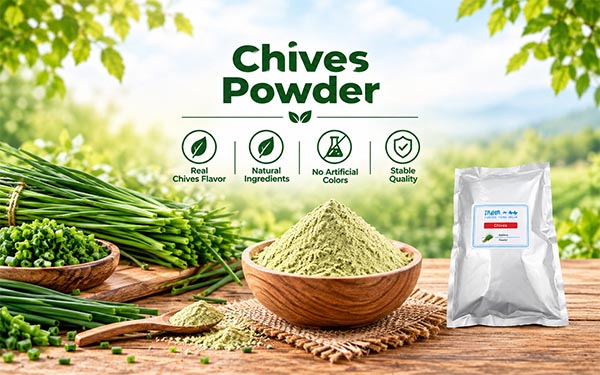
Food Scallion Powder Flavor | Concentrated & Bulk Supply
Typical Aromatic Profile:
Primary Aroma (Pungent Scallion Note): Primarily composed of sulfur-containing compounds—such as dipropyl disulfide, methyl propyl disulfide, and allyl propyl disulfide—which provide the sharp, penetrating impact characteristic of freshly cut scallions.
Green/Fresh Leaf Note: Incorporates *cis*-3-hexenol-type “green” compounds, along with trace amounts of leaf-alcohol derivatives or fresh, crisp aromatic agents, ensuring the scent evokes “fresh scallion leaves” rather than mere dried scallion powder.
Cooked/Sweet Scallion Base: Features subtle caramelized-sweet and stewed-like notes—often achieved through a careful balance of pyrazines, sulfur compounds, and aldehydes—which, upon heating, evoke the aroma of sautéed scallions, scallion-infused oil, or a savory scallion-based broth.
Rounding and Finish: Small amounts of compounds bordering on spicy or garlicky notes may be used, though with great caution; an excess can shift the profile toward onion, garlic, chives, or an overly heavy scallion-oil character.
Applications & Recommended Usage:
Puffed Snacks and Topical Seasonings: Potato chips, French fries, corn chips, popcorn, toasted flatbread slices, and crispy rice snacks—used for flavors such as scallion, scallion-chicken, or scallion-pork rib.
Convenience Foods and Complex Seasonings: Seasoning powders or soup bases for instant noodles and rice noodles (including *suanlafen* or hot-and-sour noodles), hot pot soup bases, *malatang* (spicy hot pot) bases, marinades, and dry seasoning dusts.
Biscuits and Baked Goods: Scallion-flavored crackers, soda crackers, thin crisps, savory breads, savory cookies, and scallion-flavored shortbread or pastries. Frozen and Pre-prepared Foods: Seasonings for frozen bun/dumpling fillings, sauce/powder mixes for scallion-oil noodles, and soup bases for convenience meals.
Meat Products and Vegetarian Foods: Ham sausages, meat floss (rousong), vegetarian meat, and plant-based fillings.
Egg Products and Soups: Egg-drop soup, instant soup mixes, and ready-to-eat soups.
The exact dosage may vary depending on the specific product formulation and desired flavor intensity. We recommend conducting small-scale trials to determine the optimal usage level.
Recommended Dosage:
Potato chips/puffed snacks (surface seasoning): 0.2%–0.8% (typically 0.3%–0.5%)
Instant noodle sauce/soup powders: 0.1%–0.5% (typically 0.15%–0.3%)
Compound seasonings/marinades/hot pot bases: 0.1%–0.4%
Scallion-flavored crackers/baked goods: 0.2%–0.8% (typically 0.3%–0.5% based on flour weight)
Frozen fillings/pre-prepared meal seasonings: 0.1%–0.4%
Ham sausages/vegetarian meat/meat floss: 0.1%–0.3%
Instant soup mixes/egg-drop soup: 0.05%–0.3%
Blends with real scallion powder: Use the flavoring at 5%–30% of the weight of the scallion powder for flavor enhancement.